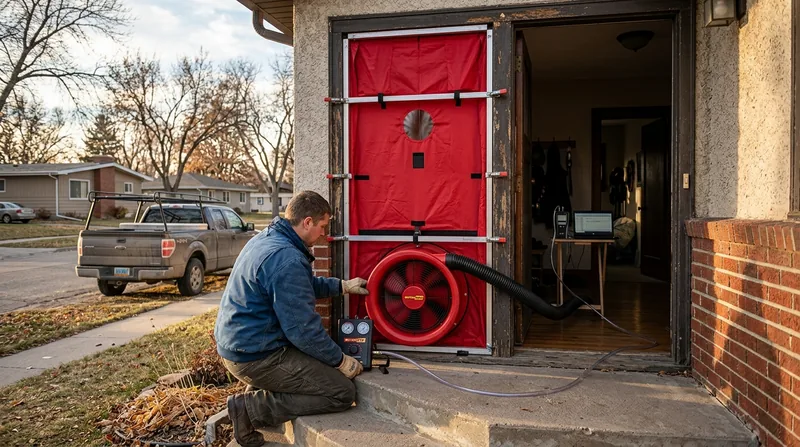




Air sealing in Bismarck stops the wind-driven air leakage that costs you money every winter. Prairie wind finds gaps at rim joists, top plates, and penetrations across Bismarck's mix of older downtown bungalows, mid-century ranches, and newer subdivisions. Stack effect pulls warm, moisture-laden indoor air up through wall cavities and out through the attic, while cold air gets pushed down into basements. We blower-door test your house, identify where the leaks actually are, and seal them with spray foam and mechanical closure so the wind cannot push your heat away. The result is lower heating bills, steadier indoor temperature, and less strain on your furnace during Bismarck's long, brutal heating season.
Why Air Sealing Matters in Bismarck's Climate and Housing Stock
Bismarck sits on the Northern Plains where winter temperatures drop well below zero and wind gusts routinely exceed 30 mph. Older homes near downtown and the state capitol, mid-century ranches in established neighborhoods, and newer subdivisions on the north and south edges all face the same enemy: wind-driven air leakage and stack effect that push conditioned air out of the house and pull cold air in. The rim and band joists where foundation meets framing are usually the weak point, a cold edge that drives leakage up through the house all winter. Wall cavities in mid-century ranches often still carry thin original batt insulation, while every window, door frame, and utility penetration becomes a pathway for prairie wind.
Air sealing stops this leakage at the source. We target the thermal boundary of your home, closing the gaps that blower-door testing reveals, so conditioned air stays inside and heating costs drop.
- We identify air leakage paths using blower-door testing to pinpoint exactly where wind and stack effect are pulling heat out.
- We seal rim joists, top plates, band joists, and rim board penetrations with closed-cell spray foam to stop wind-driven leakage at the foundation.
- We close gaps around electrical outlets, plumbing stacks, HVAC chases, and ductwork in attics and walls where air escapes into unconditioned space.
- We seal the top plate where walls meet the attic, a major leakage point in Bismarck homes that drives stack effect all winter.
- We address penetrations at roof edges, gable vents, and soffit areas where wind pressure forces air out of the thermal boundary.
Air sealing is the single most cost-effective way to cut heating loss in an older Bismarck home and is the foundation of any serious energy retrofit.
Key info: A typical Bismarck home loses 30 to 50 percent of its heating through air leakage alone. Stack effect in winter means warm air rises out of your basement and living spaces into the attic, pulling cold basement air in at the rim joist. Sealing the rim joist and top plate stops this cycle and drops heating bills measurably.
For detailed guidance on air sealing requirements and how they interact with attic ventilation in your area, consult the City of Bismarck Building Department or your local building official, as energy code and ventilation rules vary by address and jurisdiction.
How We Seal Air Leaks in Bismarck Homes and Buildings
Air sealing is a diagnostic and precision job. We start by understanding your home's construction, then use blower-door testing to map where air is actually escaping. Once we know the leakage paths, we seal them with closed-cell spray foam, mechanical closure, or caulk depending on the gap size, location, and building code requirements at your address. The goal is to create a continuous, durable thermal and air barrier without trapping moisture or violating ventilation code.
Here is how we approach a typical air sealing project in Bismarck:
- We perform a blower-door test to pressurize your house and identify exactly where air is leaking into or out of the thermal envelope.
- We inspect the rim joist, top plate, band joist, and all penetrations (electrical, plumbing, HVAC, ductwork) to determine the best sealing method for each gap.
- We seal rim joists and band joists with closed-cell spray foam, which provides both air sealing and R-value, critical in Bismarck's winter.
- We caulk or foam smaller gaps around outlets, switches, and penetrations in walls and attics, ensuring all connections to unconditioned space are closed.
- We seal the top plate and attic air boundary where walls meet the roof deck, stopping stack effect and wind-driven leakage.
- We verify the work with a post-sealing blower-door test to confirm leakage has dropped and the air barrier is continuous.
The result is a tighter house that holds its heat longer, reduces furnace cycling, and lowers your heating bill through the long Bismarck winter.
Real example: A 1970s ranch in Bismarck with a vented attic and original rim joist showed blower-door leakage of 4,500 CFM at 50 pascals. After we sealed the rim joist, top plate, and attic penetrations with closed-cell foam, the same test showed 2,800 CFM, a 38 percent reduction in air leakage. Heating bills in the following winter dropped by about 22 percent.
Learn more about how rim joist and band joist sealing works as part of a complete air sealing strategy, or explore attic spray foam insulation if your attic also needs thermal improvement.
Air Sealing Methods and When to Use Each
| Method | Description | Best for |
|---|---|---|
| Closed-cell spray foam | High-density foam applied to rim joists, band joists, and top plates; provides R-value and air sealing in one pass; excellent for Bismarck's extreme cold. | Rim and band joists, top plates, foundation penetrations where both thermal and air barrier are needed. |
| Open-cell spray foam | Lower-density foam used for air sealing in attics and wall cavities; less R-value per inch but vapor-permeable, reducing condensation risk in cold climates. | Attic penetrations, interior wall cavities, and areas where vapor permeability helps manage moisture during Bismarck winters. |
| Caulk and sealant | Polyurethane or silicone caulk for small gaps around outlets, switches, plumbing stacks, and trim; durable and code-compliant for minor penetrations. | Electrical outlets, plumbing penetrations, trim gaps, and small cracks where foam is overkill or code restricts foam use. |
| Mechanical closure | Rigid foam board, gaskets, or weatherstripping applied to soffit vents, gable vents, or attic hatches to stop wind-driven leakage while maintaining required ventilation. | Vented attic edges, soffit areas, and gable vents where airflow must be controlled but ventilation code requires some air movement. |
The right method depends on the gap size, location, building code at your address, and whether the space is conditioned or unconditioned. We assess each area during the blower-door test and recommend the most durable, code-compliant solution for Bismarck's climate.
Air Sealing Cost in Bismarck: What to Expect
Air sealing costs in Bismarck start at around $650 for a focused rim joist or top plate seal on a smaller home, and scale up based on the size of the house, the number of penetrations, and whether blower-door testing is included. A typical mid-sized Bismarck home with a full basement, vented attic, and multiple utility penetrations runs $1,500 to $3,500 for comprehensive air sealing and blower-door testing before and after. Larger homes, homes with complex geometry, or projects that combine air sealing with insulation removal or replacement cost more.
Factors that affect the final price include the square footage of the thermal boundary, the number and size of gaps to seal, whether you want pre- and post-sealing blower-door tests, travel time from our shop to your location, and whether the job includes attic access challenges or crawl space work. Bismarck homes built in the 1950s to 1970s often have more rim joist and penetration sealing work than newer homes, which can raise the cost but also deliver bigger energy savings.
We recommend getting 2 to 3 estimates from different contractors so you can compare scope, methods, and price. View our full pricing overview for more detail, or call us at (701) 401-8619 for a free estimate tailored to your home.
Air Sealing Near Me: What Bismarck Homeowners Should Know Before Hiring
When you search for air sealing contractors near Bismarck, you will find a mix of local independent shops, national franchise operations, and out-of-state crews. The key is to verify that any contractor you hire is fully insured, provides a written estimate with specific details on scope and methods, and is willing to explain how their work complies with Bismarck's building code and energy code. Air sealing is precision work, and a good contractor should be able to show you the blower-door data, explain the R-value and thickness of any foam they apply, and give you a clear re-entry window before you can occupy the space.
Here is what to look for when hiring an air sealing contractor in Bismarck or the surrounding areas:
- Verify that the contractor carries full insurance coverage and can provide a current certificate of insurance before work begins.
- Request a written estimate that specifies the areas to be sealed, the materials and methods to be used, and the expected R-value or thickness of any foam applied.
- Ask whether blower-door testing is included, and if so, whether you will receive pre- and post-sealing reports showing the reduction in air leakage.
- Confirm that the contractor understands Bismarck's local building code and energy code, and will coordinate with your building department if permits are required.
- Check references from recent projects in Bismarck, Mandan, Lincoln, or surrounding Burleigh and Morton county areas to verify workmanship and customer satisfaction.
- Ask about the re-entry window if spray foam is used, the ventilation plan during cure, and any odor or off-gassing you should expect.
A contractor who avoids these details, offers a price far below market with no inspection or testing, or promises immediate re-entry after foam application is a red flag. Contact us for a free, no-obligation estimate and we will walk you through our process step by step.
Air Sealing in Bismarck: Pricing Guide
| Service | Price | Details |
|---|---|---|
| Rim joist and band joist sealing | Starting at $650 | Closed-cell foam applied to foundation perimeter, includes blower-door diagnostic and spot sealing of major leakage points |
| Comprehensive air sealing with blower-door testing | Starting at $1,500 | Full thermal boundary assessment, pre- and post-sealing blower-door tests, rim joist, top plate, attic penetrations, and utility closures |
| Mid-sized Bismarck home full air sealing retrofit | $1,500 to $3,500 | Typical 1,500 to 2,000 sq ft home with basement, vented attic, multiple penetrations, and blower-door testing before and after sealing |
| Complex or large-scale air sealing project | On estimate | Larger homes, crawl space sealing, attic removal and re-sealing, or projects requiring multiple days of work need site assessment for accurate pricing |
| Travel within service area | Included | No separate mileage fee or travel charge for Bismarck, Mandan, Lincoln, and surrounding Burleigh and Morton county service areas |
| Free estimate | No charge | Response within 24 hours at (701) 401-8619, includes site walk-through, scope discussion, and written proposal with no obligation to book |
Indicative pricing, the exact cost depends on square footage, finish, and site access. Free personalized estimate within 24h at (701) 401-8619.


