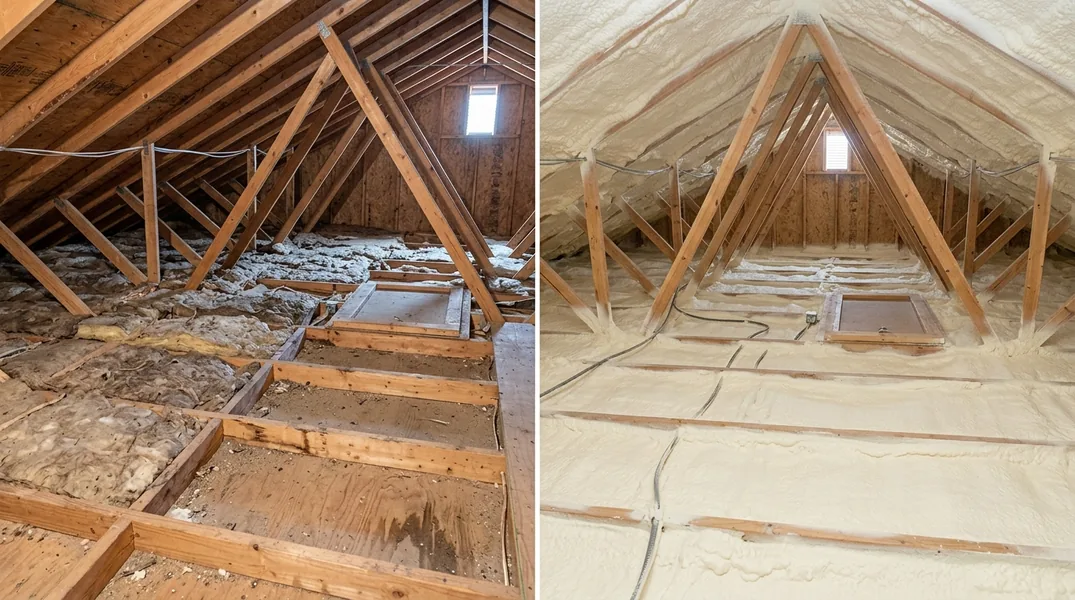
The Mid-Century Ranch Problem: Why Your Bismarck Home Feels Drafty
If you own a mid-century ranch in Bismarck, you already know the story. Those charming homes built between the 1950s and 1970s have character, solid bones, and often surprising inefficiency when it comes to temperature control. The walls are thinner than modern construction standards, insulation materials have settled or deteriorated over decades, and air leaks are practically a guarantee at this point in the home's life.
The real culprit hiding behind those walls is usually a combination of factors: original fiberglass batts that have compressed, gaps where materials never fully met, and structural settling that created new air pathways over time. Bismarck homeowners with these older properties often find themselves paying premium heating bills in winter and struggling to keep cool in summer, even with newer HVAC systems. The question becomes not just whether to upgrade, but what solution actually works for a home that wasn't designed with modern energy efficiency in mind.
Is Spray Foam Insulation Worth It? The Real Economics for Homeowners
Whether Attic Spray Foam Insulation is worth the investment depends on your specific situation, but the numbers often tell a compelling story. Yes, the upfront cost is higher than traditional fiberglass batts or blown-in cellulose. However, spray foam creates an air seal that those materials simply cannot match. This means less conditioned air escaping through gaps and cracks, which translates directly to lower utility bills month after month.
For mid-century homes in Bismarck that already struggle with energy efficiency, the payback period typically ranges from 5 to 8 years, depending on your current energy costs and the extent of the upgrade. After that payback period, you're essentially getting free energy savings. Additionally, spray foam improves moisture control in attics and wall cavities, reducing the risk of mold and wood rot that can cost thousands to remediate. When you factor in potential energy rebates from local utilities, extended equipment lifespan due to reduced strain on HVAC systems, and increased home resale value, the investment becomes increasingly attractive.
Is Spray Foam Insulation Safe? Understanding the Facts and Concerns
Safety concerns around spray foam are legitimate questions that every homeowner should ask before proceeding. The primary concern centers on two areas: off-gassing during and immediately after installation, and long-term chemical exposure. When spray foam is applied, it releases volatile organic compounds (VOCs) as the material cures. This is why professional installers require proper ventilation, and why you should vacate the home or stay in unaffected areas during application and for a period afterward.
The good news is that once fully cured, spray foam is chemically inert and poses minimal ongoing health risk. Closed Cell Spray Foam Insulation typically off-gasses faster and more completely than open cell varieties, returning to safe occupancy levels within 24 to 48 hours in most cases. Open cell foam may require slightly longer off-gassing periods. Careful professional installation ensures proper application, adequate ventilation, and adherence to EPA guidelines. Always verify that your installer uses products that meet or exceed EPA standards and ask about their safety protocols before signing any contract.
Spray Foam Off Gassing: What Happens and How Long It Lasts
Spray foam off-gassing is a natural part of the curing process, and understanding it removes much of the mystery and concern. When the two-part foam components mix and expand, chemical reactions occur that release VOCs into the air. These compounds dissipate over time as the foam fully hardens. The intensity and duration of off-gassing varies based on the type of foam, application thickness, temperature, and ventilation conditions.
Closed Cell Spray Foam Insulation typically completes off-gassing within 24 to 48 hours, while Open Cell Spray Foam Insulation may take up to a week to fully cure and off-gas. Professional installers in Bismarck will provide clear guidance on occupancy restrictions and ventilation needs. Many recommend opening windows, running exhaust fans, and using air purifiers during the curing period. If you have respiratory sensitivities, asthma, or other health concerns, discuss this with your installer beforehand so they can plan accordingly and potentially use low-VOC products or adjust application timing.
Spray Foam Insulation Pros and Cons: The Complete Picture
Like any home improvement solution, spray foam has distinct advantages and limitations worth weighing carefully. The primary advantages are exceptional air sealing (superior to any other insulation type), high R-value per inch of material, moisture resistance, structural reinforcement of walls and attics, and long-term durability. Spray foam doesn't settle over time like fiberglass, doesn't compress, and resists moisture infiltration that can compromise other insulation types. For homes in Bismarck dealing with harsh winters and temperature extremes, these benefits are substantial.
The cons include higher initial cost, off-gassing concerns during installation, difficulty with future modifications (spray foam is permanent and hard to remove if you later need to access walls), and the need for professional installation rather than DIY application. Some homeowners also express environmental concerns about foam manufacturing, though modern products are increasingly formulated with recycled content and lower environmental impact. Additionally, while spray foam itself is durable, improper installation can lead to problems like incomplete coverage or application over moisture sources. This is why choosing a reputable, experienced installer like Bismarck Spray Foam Insulation is critical. Request a free estimate and ask detailed questions about their experience with mid-century homes and their quality assurance processes.
Attic Spray Foam Insulation Cost in Bismarck: What to Budget
Understanding pricing for spray foam projects helps you make an informed decision. Costs vary based on several factors including attic square footage, current insulation condition, accessibility, and whether you choose closed cell or open cell foam. Closed cell foam typically costs more per square foot but provides higher R-value and superior moisture control, making it ideal for attics in areas prone to condensation. Open cell foam is more affordable and still provides excellent insulation, though it requires more thickness to achieve equivalent R-values.
For a typical mid-century ranch attic in Bismarck, you might expect to invest anywhere from $1,500 to $4,000 or more for a complete upgrade, depending on attic size and current conditions. While this seems substantial, remember that energy savings, potential utility rebates, and increased home value offset much of this cost over time. Don't automatically choose the cheapest quote. Instead, compare the experience level of contractors, warranty offerings, and whether they provide detailed assessments of your home's specific needs. Contact Bismarck Spray Foam Insulation at (701) 401-8619 to discuss your project and get a detailed estimate tailored to your home's unique requirements.
Looking for a professional spray foam insulation contractor in Bismarck? Bismarck Spray Foam Insulation responds fast for all your spray foam insulation needs.
Get a Free Quote