Does New Construction Really Need Spray Foam Insulation?
When you're building a new home in Mandan or Lincoln, you might assume that code-compliant insulation is enough. After all, builders follow state and local regulations, and new homes come with modern materials and construction techniques. But here's the truth: meeting minimum code requirements and achieving optimal energy efficiency are two different things.
Building codes set the floor, not the ceiling. They establish baseline standards to ensure safety and basic performance, but they don't necessarily account for the extreme weather conditions that homeowners in North Dakota experience. Winter temperatures regularly drop well below zero, and energy costs can skyrocket if your home isn't properly insulated. Attic Spray Foam Insulation goes beyond code compliance to provide superior air sealing, thermal resistance, and long-term savings that standard fiberglass batts simply cannot match.
How Standard New Construction Insulation Falls Short
Most new homes in the Bismarck area are built with fiberglass batts or blown-in cellulose insulation. These materials meet code requirements and are cost-effective at the time of construction, but they have significant limitations. Fiberglass batts don't create an air-tight seal; they leave gaps around electrical outlets, pipes, and framing members where warm air escapes during winter. Over time, fiberglass also settles and compresses, reducing its R-value effectiveness.
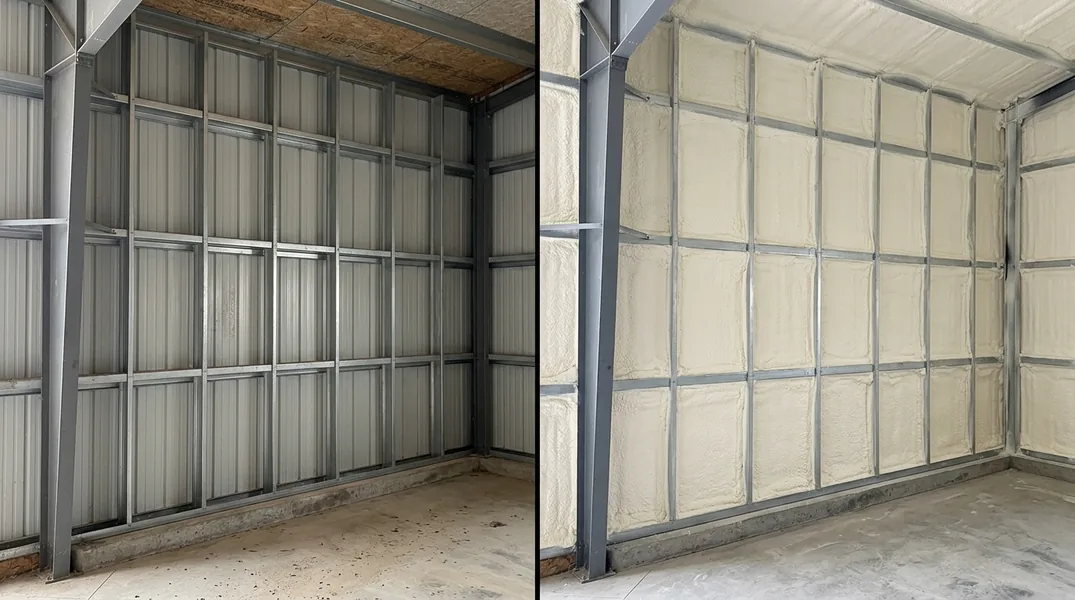
Cellulose insulation performs better than batts in some respects, but it still relies on air barriers (like drywall) to prevent air leakage. If your home has any structural settling, vibration, or moisture issues, these materials can degrade faster than expected. In contrast, spray foam insulation expands to fill every cavity and crack, creating a continuous thermal and air barrier that maintains its performance for decades. For new construction where you're making a long-term investment, the difference in comfort and energy bills is substantial.
Why North Dakota's Climate Demands Better Insulation
North Dakota winters are unforgiving. Temperatures regularly dip to 20, 30, or even 40 degrees below zero. Wind chills make it feel even colder. Your home's insulation isn't just about comfort; it's about protecting your investment and managing utility costs that can easily exceed $2,000 annually in poorly insulated homes. Standard code-compliant insulation in new construction typically provides R-38 to R-49 in attics, which is adequate but not optimal for this climate.
Spray foam insulation can achieve R-values of 6 to 7 per inch, meaning a 5.5-inch application delivers R-33 to R-38 in your attic alone, with superior air sealing that fiberglass cannot provide. The continuous barrier also prevents thermal bridging through framing members, a major source of heat loss that most builders don't address. When you factor in the extreme weather patterns and heating season length in our region, upgrading to spray foam during new construction is an investment that pays for itself through energy savings within 5 to 10 years.
Attic Spray Foam Insulation Near Me: When to Choose It for New Builds
If you're currently building a new home in Mandan, Lincoln, or the surrounding areas, now is the ideal time to upgrade your insulation strategy. During construction, the attic and walls are fully accessible, and adding spray foam doesn't require the extensive preparation or free estimate consultations that retrofitting older homes demands. Builders who prioritize energy efficiency increasingly offer Closed Cell Spray Foam Insulation as an upgrade option because homeowners recognize its value.
Closed cell spray foam is particularly well-suited for new construction attics because it provides structural reinforcement, moisture resistance, and superior R-value in a compact package. Open cell spray foam is another option if you're looking for a more cost-effective solution with excellent sound dampening properties. The choice depends on your budget, priorities, and specific home design. Either way, discussing spray foam options with your builder early in the planning process ensures it can be incorporated seamlessly into your construction timeline and budget.
Long-Term Savings and Resale Value
New homeowners often focus on immediate construction costs and overlook the long-term financial implications of insulation choices. A home built with standard fiberglass insulation might cost $500 to $1,000 less to construct than one with spray foam, but that savings evaporates quickly when you're paying higher heating bills every winter. Over a 30-year mortgage, the difference in energy costs can easily exceed $15,000 to $30,000, making spray foam the more economical choice despite its higher upfront price.
Beyond energy savings, homes with superior insulation and air sealing command higher resale values and attract more buyers. Energy-conscious homebuyers increasingly ask about insulation type and R-values during the purchasing process. A new home in Mandan or Lincoln built with spray foam insulation is a stronger selling point than one with standard fiberglass, especially as energy costs continue to rise. You're not just improving your own comfort and wallet; you're enhancing your home's market appeal and long-term value.
Taking Action: Upgrading Your New Construction Insulation
If you're in the planning or early construction phase for a new home, contact Bismarck Spray Foam Insulation today to discuss how spray foam can enhance your build. Our team has worked with builders throughout the region to integrate spray foam insulation into new construction projects, and we understand the timeline, logistics, and pricing considerations that matter to homeowners and contractors alike. We can provide guidance on whether Wall & Injection Foam Insulation is appropriate for your specific walls, or if attic foam is the priority.
Don't settle for minimum code compliance when you're building the home where you'll spend the next 20, 30, or 40 years. Call us at (701) 401-8619 or visit our website to request a free estimate and learn how spray foam insulation can transform your new construction into a high-performance, energy-efficient home. The difference in comfort, savings, and peace of mind is well worth the conversation.
Looking for a professional spray foam insulation contractor in Bismarck? Bismarck Spray Foam Insulation responds fast for all your spray foam insulation needs.
Get a Free Quote