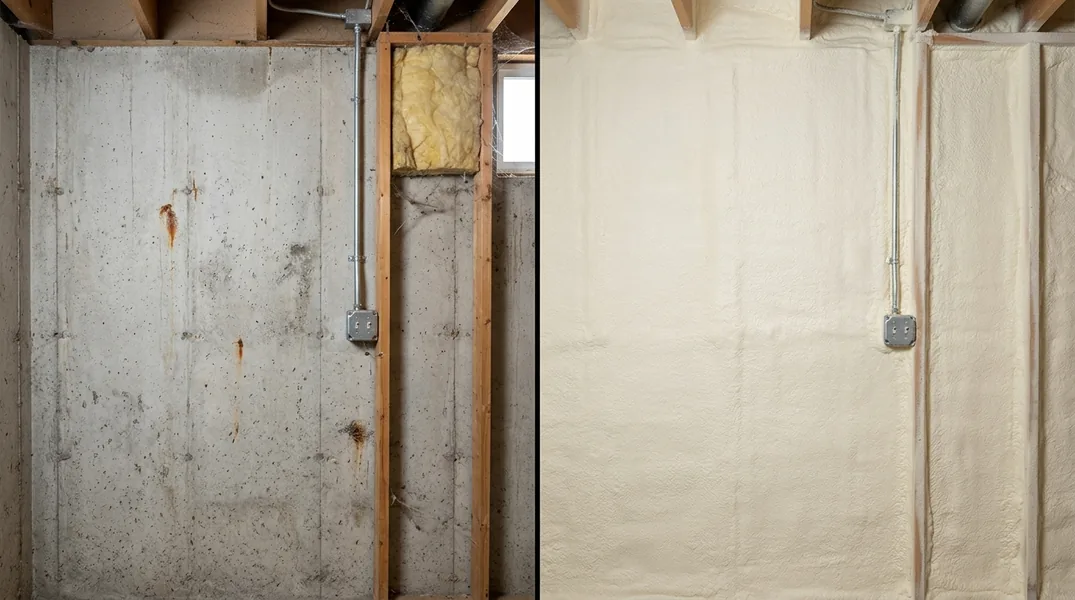
Understanding Spray Foam Attic Insulation Basics
Attic spray foam insulation has become one of the most effective ways to improve home energy efficiency and comfort in Bismarck. Unlike traditional fiberglass batts or blown cellulose, spray foam expands to fill gaps, cracks, and irregular spaces, creating a continuous thermal barrier that reduces air leakage. This air sealing capability is what makes spray foam so valuable for homeowners looking to lower utility bills and maintain consistent indoor temperatures year-round.
When you invest in attic spray foam insulation, you are essentially creating a sealed environment that prevents conditioned air from escaping through your attic. This is especially important in climates like Bismarck, where winter temperatures can plummet and heating costs can skyrocket. However, not all spray foam is created equal. The two primary types, open cell and closed cell, offer different benefits and drawbacks depending on your specific needs.
What is Open Cell Spray Foam Insulation?
Open Cell Spray Foam Insulation has a lower density structure, meaning the cells are not completely filled. Think of it like a sponge: the material expands significantly and remains somewhat flexible. This type of foam typically has an R-value of around 3.5 to 3.6 per inch, making it a good insulator but not the highest-performing option available. Open cell foam is also more permeable to moisture and air, which can be an advantage in certain situations.
The main advantages of open cell foam include lower material cost, easier installation, and better sound dampening properties. Because it is less dense, it weighs less and is gentler on attic structures. Homeowners in Bismarck who are budget-conscious often appreciate the reduced pricing associated with open cell options. Additionally, if your attic has complex framing or numerous obstacles, open cell foam can be easier to apply thoroughly. However, the moisture permeability of open cell foam means it is not ideal for areas prone to condensation or where vapor barriers are critical.
What is Closed Cell Spray Foam Insulation?
Closed Cell Spray Foam Insulation is a denser, more rigid material where the cells are completely filled, creating a solid, impermeable barrier. This type of foam delivers superior insulation performance with an R-value of approximately 6.0 to 6.5 per inch, nearly double that of open cell foam. The closed cell structure also provides exceptional moisture and air resistance, making it the preferred choice for sealed attic insulation applications where vapor control is essential.
The primary advantage of closed cell foam is its superior thermal performance and moisture protection. In a climate like Bismarck, where winter moisture can be a concern, closed cell foam provides peace of mind. It also adds structural rigidity to your attic, which can be beneficial in areas prone to high winds or snow loads. Additionally, Closed Cell Spray Foam Insulation is less permeable to air, making it ideal for creating truly unvented attic spray foam systems. The trade-off is that closed cell foam costs more per board foot and requires specialized equipment and training to install properly.
R-Value and Thermal Performance Comparison
When comparing insulation options, R-value is a critical metric that measures thermal resistance. Open cell spray foam typically achieves an R-value of 3.5 to 3.6 per inch, which means you would need approximately 6 to 7 inches to reach an R-30 rating. Closed cell foam, with its R-value of 6.0 to 6.5 per inch, requires only about 5 inches to achieve the same R-30 rating. For homeowners in Bismarck looking to maximize insulation value in limited attic space, closed cell foam is clearly the winner.
However, R-value alone does not tell the complete story. The air sealing properties of both foam types are equally important, if not more so. Air leakage accounts for a significant portion of home energy loss, and spray foam addresses this problem far better than traditional insulation materials. If your attic has adequate vertical space and budget is a primary concern, open cell foam will still deliver meaningful energy savings. If you are working with limited space or want the absolute best thermal performance, closed cell foam is the superior choice, even though it commands a higher pricing point.
Moisture Management and Attic Ventilation Considerations
One of the most important decisions when choosing between open cell and closed cell foam is understanding how each type handles moisture. Open cell foam is vapor-permeable, meaning moisture can pass through it. This characteristic requires careful attention to attic ventilation and vapor barriers. If you choose open cell foam, your attic must remain vented to allow moisture to escape, and you will need a proper vapor barrier on the warm side of the insulation. This adds complexity to the installation and may limit where open cell foam can be effectively used.
Closed cell foam, by contrast, is vapor-impermeable and can be used to create a truly unvented attic spray foam system. This approach eliminates the need for attic ventilation and vapor barriers, simplifying the overall design. For Bismarck homeowners dealing with harsh winter conditions and potential condensation issues, an unvented attic with closed cell foam provides superior moisture control and prevents mold growth. The conditioned air from your living space will not migrate into the attic, where it could cool and create condensation problems. This is a significant advantage that closed cell foam offers over open cell alternatives.
Choosing the Right Foam for Your Bismarck Home
Deciding between open cell and closed cell spray foam ultimately depends on your specific situation, budget, and long-term goals. If you have adequate attic height, are looking to minimize upfront costs, and do not have moisture concerns, open cell foam is a reasonable choice that will still improve your home's energy efficiency significantly. Many homeowners appreciate the lower cost and the sound-dampening benefits of open cell foam, making it an attractive option for attic applications where these factors align with their priorities.
Conversely, if you want maximum thermal performance, are concerned about moisture in your attic, have limited vertical space, or are building or renovating with a long-term perspective, closed cell foam is the superior investment. The higher initial cost is often recouped through lower energy bills over time, and the added benefits of moisture control and structural support make it worth the premium. In Bismarck, where winters are cold and attic moisture management is critical, many experienced contractors recommend closed cell foam for optimal performance.
The best way to determine which option is right for your home is to schedule a professional assessment. Contact Bismarck Spray Foam Insulation at (701) 401-8619 to discuss your attic's specific conditions, your energy goals, and your budget. Our team can evaluate your space and provide a detailed recommendation along with a free estimate tailored to your needs.
Additional Spray Foam Solutions Beyond the Attic
While attic insulation is a primary application, spray foam technology offers benefits throughout your home. Wall & Injection Foam Insulation can improve the energy efficiency of exterior walls, basement walls, and crawl spaces. These applications are particularly valuable for older homes in Bismarck that were built with minimal insulation or homes where traditional retrofit insulation options are limited. Injection foam can be applied without removing drywall or siding, making it a less invasive option for improving wall insulation.
Whether you are focused exclusively on attic improvements or considering a whole-home insulation upgrade, Bismarck Spray Foam Insulation is equipped to help. Our expertise spans residential and commercial applications, and we understand the unique climate challenges facing homes in this region. To learn more about how spray foam insulation can benefit your property and to explore all available options, reach out to our team for a free estimate today.
Looking for a professional spray foam insulation contractor in Bismarck? Bismarck Spray Foam Insulation responds fast for all your spray foam insulation needs.
Get a Free Quote